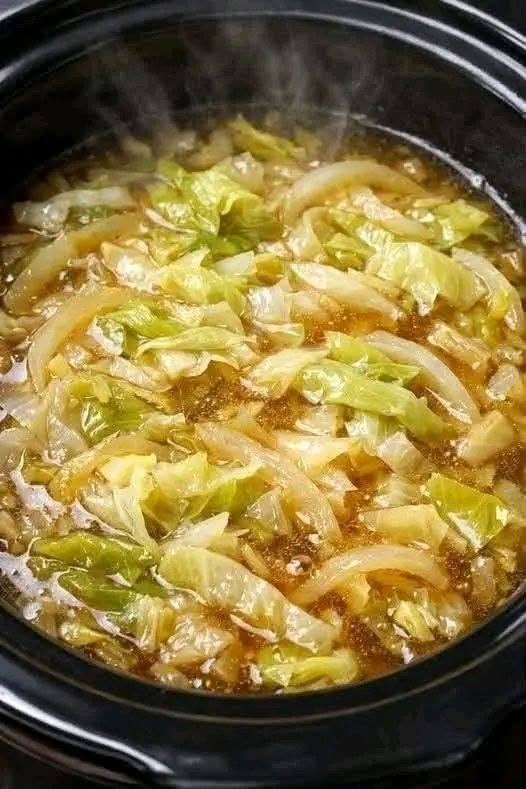
Prepare the Vegetables: Begin by thinly slicing the three large yellow onions. Aim for uniform slices to ensure even cooking. Core the medium head of green cabbage and then thinly slice or chop it into bite-sized pieces. Mince the two cloves of garlic. Having all your vegetables prepped and ready before you start cooking will make the process much smoother.
Sauté the Onions: Heat the olive oil or butter in a large, heavy-bottomed pot or Dutch oven over medium-low heat. Add the sliced onions and cook, stirring occasionally, for 15-20 minutes. This slow cooking process is crucial for developing their natural sweetness and creating a rich flavor base for the soup. You want them to become very soft, translucent, and just beginning to caramelize to a golden-brown color. Do not rush this step, as it significantly impacts the final taste of your soup.
Add Garlic and Cabbage: Once the onions are soft and golden, add the minced garlic to the pot. Sauté for another 1-2 minutes until fragrant, being careful not to burn the garlic. Immediately add the sliced cabbage to the pot. It will seem like a lot of cabbage, but it will cook down significantly. Stir the cabbage with the onions and garlic, allowing it to wilt for about 5-7 minutes, stirring occasionally. The cabbage should start to soften and reduce in volume.
Introduce Liquids and Seasonings: Pour in the vegetable broth and water. If using, add the can of diced tomatoes (undrained). Stir in the dried thyme, bay leaf, and freshly ground black pepper. Add 1 teaspoon of salt at this stage; you can adjust later. Bring the soup to a gentle boil over medium-high heat.
Simmer to Perfection: Once boiling, reduce the heat to low, cover the pot, and let the soup simmer for at least 20-30 minutes, or until the cabbage is very tender and the flavors have melded together. If you prefer a softer texture, you can simmer it for up to 45 minutes to an hour. The longer it simmers, the more the flavors will deepen and develop.
Final Adjustments and Serving: Remove the bay leaf before serving. Taste the soup and adjust seasonings as needed. You might want to add more salt, pepper, or a pinch of sugar if the onions weren’t sweet enough. For a brighter flavor, stir in a splash of apple cider vinegar or lemon juice right before serving. Ladle the hot soup into bowls and garnish with fresh chopped parsley, if desired.
Cooking Tips and Variations
Achieving the best flavor in your Cabbage and Onion Soup largely hinges on how you treat those two core ingredients. Don’t rush the sautéing of the onions; truly caramelizing them until they are a deep golden brown will bring out an incredible sweetness and umami that forms the backbone of the soup’s flavor. This step can take 20-30 minutes over medium-low heat, so be patient. For even richer flavor, consider using half vegetable broth and half water, or a good quality chicken broth if you’re not keeping it vegetarian. A touch of tomato paste added with the garlic and cooked for a minute can also add depth and color. Season generously throughout the cooking process, tasting and adjusting. Cabbage can absorb a lot of seasoning, so don’t be shy with salt and pepper. A pinch of red pepper flakes can introduce a subtle warmth without making it spicy, while a dash of smoked paprika can add a lovely smoky undertone.
The beauty of this soup lies in its adaptability. For a heartier meal, you can easily add cooked grains like farro, barley, or brown rice during the last 15 minutes of simmering. Diced potatoes or carrots can also be added along with the broth for extra substance and nutrients. If you’re looking for a protein boost, shredded cooked chicken, white beans, or even browned ground sausage can be stirred in during the last few minutes of cooking. For a creamy texture, a swirl of coconut milk (for vegan) or heavy cream can be added at the very end, just before serving. To enhance the herbaceous notes, experiment with fresh herbs like dill, marjoram, or sage alongside the parsley. A sprinkle of grated Parmesan cheese or a dollop of sour cream (or a dairy-free alternative) can be a delightful topping, adding richness and tang. Don’t be afraid to make this recipe your own; it’s designed to be flexible and forgiving.
Storage and Reheating
Cabbage and Onion Soup is one of those dishes that often tastes even better the next day, as the flavors have more time to meld and deepen. To store leftovers, allow the soup to cool completely to room temperature. Transfer it to an airtight container and refrigerate for up to 3-4 days. For longer storage, this soup freezes exceptionally well. Pour the cooled soup into freezer-safe containers or heavy-duty freezer bags, leaving some headspace for expansion. It can be frozen for up to 3 months. Thaw frozen soup overnight in the refrigerator before reheating.
When it comes to reheating, you have a few options. For individual servings, the microwave works well; heat in 1-minute intervals, stirring in between, until hot. For larger quantities, gently reheat the soup on the stovetop over medium-low heat, stirring occasionally, until it reaches your desired temperature. If the soup has thickened too much during storage, you can add a splash of extra broth or water to achieve the desired consistency. Always taste and adjust seasonings after reheating, as flavors can sometimes mellow in the refrigerator or freezer. A fresh sprinkle of herbs or a squeeze of lemon juice can revive its vibrancy.
Frequently Asked Questions
What kind of cabbage is best for this soup?
Green cabbage is the most common and recommended type for Cabbage and Onion Soup. Its sturdy leaves hold up well during simmering, and it offers a mild, slightly sweet flavor that complements the onions perfectly. You can also use savoy cabbage for a slightly more tender texture, but avoid red cabbage as its color will bleed into the broth and it has a stronger, sometimes bitter, flavor.
Can I make this soup in a slow cooker?
Yes, you absolutely can! To adapt this recipe for a slow cooker, you’ll still want to sauté the onions on the stovetop first to develop their flavor, as this step is crucial and cannot be replicated in a slow cooker. After sautéing the onions and garlic, transfer them to the slow cooker along with the cabbage, broth, water, diced tomatoes (if using), and all seasonings. Cook on low for 6-8 hours or on high for 3-4 hours, until the cabbage is very tender. Stir in any fresh herbs or acidity at the end.
Is this soup suitable for a low-carb or keto diet?
Yes, Cabbage and Onion Soup is naturally low in carbohydrates and can be an excellent addition to a low-carb or keto diet. Both cabbage and onions are relatively low in net carbs, and the broth provides hydration and electrolytes. To keep it strictly keto, ensure you’re using a low-carb vegetable or bone broth and avoid adding any starchy vegetables like potatoes or high-carb grains. You can enhance the fat content with extra olive oil, butter, or a swirl of heavy cream at the end.
Can I add other vegetables to this soup?
Absolutely! This soup is incredibly versatile and welcomes other vegetables. Carrots, celery, bell peppers, zucchini, and mushrooms are all excellent additions that will complement the existing flavors. Add harder vegetables like carrots and celery along with the cabbage, and softer ones like zucchini or mushrooms during the last 10-15 minutes of simmering, so they don’t become overcooked and mushy.
For Complete Cooking STEPS Please Head On Over To Next Page Or Open button (>)